

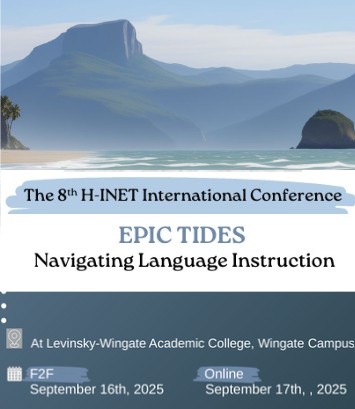
Join us for the H-INET Conference – our annual gathering of educators, researchers, and professionals dedicated to advancing the field of English for Purposes of International Communication. This event offers a valuable opportunity to share practice-based insights, engage with current research, and explore innovative approaches to teaching and learning
in diverse contexts.
The Conference offers a rich program including:
- Keynote presentation
- Oral presentations
- Writing workshop
- Workshop on adapting courses to students with special needs
- Panel discussion on adapted courses
- Panel discussion on teaching linguistic features for EPIC
- and more…
KEYNOTE SPEAKERS
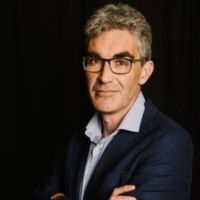

Dr. Avital Kaye-Tzadok, Ruppin Academic Center, Israel
Beyond the Classroom: Academic Responsibility in Times of Mass Trauma
PRESENTATION TOPICS
Day 1: Conference Day Tuesday 16 September 2025
- Greet old and new friends and colleagues!
- Enjoy a cup of coffee and a light snack before we begin the day
- Greetings:
- Dr. Sharon Tsuk, Head of School of Physical Education, The Levinsky-Wingate Academic College, Israel
- Dr. Leor Cohen, Chair of H-INET and Head of EPIC, The Open University, Israel
- Musical Performance: Levinsky-Wingate Administrative and Academic Staff Choir
- Dr. Beatrice Bar, Conductor
- Mr. Ohad Levy, Piano and Arrangement
- Ms. Meytal Drori, Percussion
- Choir Members:
- Yael Abramovich
- Tzur Levin
- Maya Chosyd
- Ohr Margalit
- Maayan Cohen
- Hani Rieger
- Tali Dagan
- Ora Segev
- Leah Dayan
- Dafna Tagar
- Itzhak Gilat
BEYOND THE CLASSROOM: ACADEMIC RESPONSIBILITY IN TIMES OF MASS TRAUMA – Avital Kaye-Tzadok
Mass trauma has been described as a blow to tissues of social life that damages the bonds linking people together. In its wake, individuals may become disconnected, unable to access support systems. As Herman (1997) succinctly put it: “Trauma isolates” (p. 214).
What, then, is the role of academia during and after mass trauma? How can we, as lecturers and educators, help rebuild connection and foster resilience within academic communities? This keynote will explore these questions and propose trauma-informed approaches that position higher education as a potential site for healing, meaning-making, and the restoration of human interdependence. Practical implications will also be discussed.
References: Herman, J. (1997). Trauma and recovery (2nd ed.). Basic Books.
11:30 – 11:45 BREAK
11:45 – 12:00 FOSTERING PRE-SERVICE TEACHERS` WELLBEING AND PROFESSIONAL IDENTITY CONSTRUCTION – Klarina Priborkin
Givat Washington Academic College of Education, Israel
12:00 – 12:15 ENGLISH AS THE “FAIR” LANGUAGE: PRACTICES AND RECOMMENDATIONS FOR EPIC – Brigitta Schvarcz
The Hebrew University of Jerusalem, Israel
Amy Styer
The Hebrew University of Jerusalem, Israel
12:15 – 12:30 LANGUAGE TEACHERS` COPING STRATEGIES IN TIMES OF CRISIS
Brigitta Schvarcz
The Hebrew University of Jerusalem, Israel
Ruth Stander
The Hebrew University of Jerusalem, Israel
Batsheva Gutterman
The Hebrew University of Jerusalem, Israel
Naomi Arram
The Hebrew University of Jerusalem, Israel
Anna Farfel-Litovsky
The Hebrew University of Jerusalem, Israel
Session Moderator: Dara Barnat, Tel Aviv University, Israel
11:45 – 12:00 CHATGPT OR CHAT WITH A TUTOR? REDEFINING THE WRITING CENTER IN THE AGE OF AI
Miriam Symon
Reichman University, Israel
Yohanna Levy
Reichman University, Israel
12:00 – 12:15 CURATING WITH PURPOSE: TEACHING ENGLISH COMMUNICATION IN THE AI ERA
Tal Levy
Ruppin Academic Center, Israel
12:15 – 12:30 REFLECTIONS ON LITERATURE IN AN AI WORLD: THE EPIC CONTEXT
Dara Barnat
Tel Aviv University, Israel
12:30 – 12:45 AI IN THE CLASSROOM – NAVIGATING THE ETHICAL FRONTIER
Adele Bassin
The Levinsky-Wingate Academic College, Israel
12:45 – 13:05 General Assembly
13:05 – 13:55 Lunch
Dr. Liran Gordon, Director of Research, the Council of Higher Education, Israel
Leah Goldberg
The Open University, Israel
Ann Marks
Afeka College of Engineering, Israel
Yehudit Hof
The Open University, Israel
Monica Broido
Tel Aviv University, Israel
Margie Cohen-Jackel
Ono College, Israel
15:30 – 15:45 CALIBRATING CHATGPT FOR EAP COURSE DESIGN
Julie Bordetsky
Ruppin Academic Center, Israel
15:45 – 16:00 HOW TO HARNESS AI TO HELP YOU CREATE AMAZING PROJECTS
Karen Eini
Ruppin Academic Center, Israel
16:00 – 16:15 AI AND THE CRISIS OF CRITICAL THINKING: A PROBLEM-BASED LEARNING APPROACH FOR DIVERSE EFL LEARNERS IN HIGHER EDUCATION
Yuval Or Kriger
Haifa University, Israel
The Levinsky-Wingate Academic College, Israel
The Academic College of Law and Science, Israel
15:30 – 15:45 GETTING STUDENTS TO SPEAK ENGLISH: LESSONS FROM BEING TOO SOFT
Eldad Cohen
The Academic College of Tel Aviv–Yaffo, Israel
|
15:45 – 16:00 BEYOND 30-HOUR PROFESSIONAL DEVELOPMENT: AN AGILE PHASED-MATRIX FOR SUSTAINABLE REFORM
Leor Cohen
The Open University, Israel
16:00 – 16:15 INTEGRATING SOCIAL-EMOTIONAL LEARNING IN MULTI-LEVEL ESL TUTORING: A COMPREHENSIVE FRAMEWORK FOR ENGLISH FOR INTERNATIONAL COMMUNICATION
Shiri Rosenberg
The Levinksy-Wingate Academic College, Israel
16:15 – 16:30 THE ROLE OF HASHTAGS IN ACADEMIC COMMUNICATION ON SOCIAL MEDIA
Shallom Lumor
Technion, Israel
After a full day of engaging lectures and lively discussions, we invite you to take a breath, let the traffic settle, and join us a fun and relaxing physical activity session with Yael Farkash.
Yael is a physical education and folk dance teacher, fitness trainer, and pedagogical instructor at Levinsky-Wingate College.
About the activity:
Our session will begin with tasks using the BlazePod – an educational tool that enhances concentration, reaction speed, and stimulates the brain BLAZEPOD.
The tasks do not require physical fitness, but rather mental agility and focus.
We will finish with stretching and relaxation exercises for the body and muscles, and wrap up the day with a smile 😊.
16:30 – 17:00 Sponsored Session
Day 2: Conference Day Wednesday 17 September 2025 (ON ZOOM)
GETTING YOUR RESEARCH PROJECT STARTED – METHODS AND PRINCIPLES OF RESEARCH IN THE FIELD OF APPLIED LINGUISTICS
Julia Schlam-Salman
Tel Aviv University, Israel
David Yellin Academic College, Israel
This workshop is designed to familiarize language educators with trajectories of research in applied linguistics and language education. The workshop begins with an overview of approaches and methods within the field of applied linguistics research. In small groups, workshop participants will then explore a specific method and approach within the field (for example, researching motivation or researching second language writing). Finally, participants will have an opportunity to develop an action plan for beginning their own research in applied linguistics and language education.
ZOOM recording: https://youtu.be/jLLvqbq2WXI
IS THERE A PLACE FOR GRAMMAR IN A CEFR AOA-BASED CURRICULUM?
Debbie Lahav
Ruppin Academic Center, Israel
Michal Bennoah
Ruppin Academic Center, Israel
Elisheva Barkon
Oranim Academic College of Education, Israel
In this presentation, we will share how we, at Ruppin Academic Center, have incorporated grammar into our CEFR AOA-based curricula. When the authors of the CEFR developed the English Grammar Profile (EGP), they recognized that “grammar” has a place in the acquisition aמd teaching of language. In a CEFR AOA based course, with the emphasis on using language productively in an authentic, or authentic-like, situation, learners need to be able to put words together in a manner which conveys the intended meaning. As such, with the emphasis on meaning rather than correct form, the choice of grammatical structures to include in a course should reflect the AOA tasks that students are expected to complete. We will present how the grammar document was developed and show how it is currently being implemented in the classroom and in AOA-based assessment.
ZOOM recording: https://youtu.be/njEYM04JrE4
11:00 – 11:15 Break
12:15 – 12:30 AI IN ESP MATERIALS: LIMITATIONS AND POTENTIAL
Sandra Abad-Bataller
University of Alicante, Spain
12:30 – 12:45 THE IMPACT OF AUGMENTED REALITY ON VOCABULARY AND CONTENT LEARNING IN THE CLIL CLASSROOM: AN EXPERIMENTAL STUDY IN SECONDARY EDUCATION
Mar Fernandez Alcocer
University of Alicante, Spain
12:45 – 13:00 AUGMENTED REALITY`S IMPACT ON EFL INFERENTIAL COMPREHENSION AND STRATEGY USE
Benjamin Roman
University of Alicante, Spain
13:00 – 13:15 FROM TEST-TAKERS TO TASK-DOERS: RETHINKING ASSESSMENT
Debbie Lahav
Ruppin Academic Center, Israel
Michal Bennoah
Ruppin Academic Center, Israel
Tal Levy
Ruppin Academic Center, Israel
12:15 – 12:30 HUMAN-ANIMAL RELATIONS IN LITERATURE – A TRANSCULTURAL AND POSTHUMANIST EXPLORATION
Dan Misheiker
The Levinsky-Wingate Academic College, Israel
Wiebke von Bernstorff
University of Hildesheim, Germany
Alice Gruber
Technical University of Applied Sciences Augsburg, Germany
Izabella Ross-Sokolovsky
Braude Academic College of Engineering, Israel
12:45 – 13:00 INTRODUCING EMI IN A MASTER’S PROGRAM IN TEACHER EDUCATION
Devora Hellerstein
The Levinsky-Wingate Academic College, Israel
13:00 – 13:15 DESIGINING INCLUSIVE EMI SUPPORT: STUDENT FEEDBACK FOR INSTITUTIONAL INNOVATION
Elana Spector-Cohen
Tel Aviv University, Israel
Zoom recording: https://youtu.be/ZSYWy3b-51Q
13:15 – 13:40 Lunch
NEW DATA FROM HILLAL
Debbie Mishaly
NITE, Israel
FROM HYPE TO PRACTICE: TOP AI TOOLS AND PROMPTS THAT ACTUALLY WORK IN EPIC
Elena Mizrahi
Western Galilee College, Israel
The Technion, Israel
Zoom recording: https://youtu.be/f3fhGUNNob4
15:00 – 15:15 SPOKEN PRODUCTION PRACTICE AND ASSESSMENT: USING CHATBOTS FOR SPEAKING PRACTICE AND ASSESSMENT IN EPIC CLASSROOMS
Jinet Shani
Ruppin Academic Center, Israel
The Academic Center of Law and Science, Israel
15:15 – 15:30
SUPPORTING ORAL PROFICIENCY DEVELOPMENT THROUGH AI
Laura Soriano-Gonzalez
University of Alicante, Spain
15:30 – 15:45 CUSTOMISED AI ASSESSMENT FOR EPIC: A CASE FOR NOTEBOOK LM
Daniel Portman
Azrieli College of Engineering Jerusalem, Israel
15:45 – 16:00 IMPLEMENTING PROJECT-BASED LANGUAGE LEARNING IN A PRE-SERVICE TEACHER EDUCATION PROGRAM: A MODEL FOR EXPERIENTIAL PEDAGOGY
Ira Slabodar
Hemdat College of Education, Israel
Zoom recording: https://youtu.be/Ob-NI3dvMvo
Susie Russak
Independent, Israel
Approximately 15% of all students in higher education settings have learning disabilities (Al-Yagon & Margalit, 2016), while only about 30% of EAP teachers have specific training in teaching this student population (Russak & Cohen, submitted). Moreover, less than 10% of EAP teachers have academic backgrounds in areas that are related to teaching students with learning disabilities (Russak & Cohen, in progress). By law, academic institutions are required to provide academic accommodations based on recognized diagnoses (Finkelstein, 2005). Furthermore, the Committee for the Evaluation of English for Academic Purposes in Israel (2018) stated that all higher education institutions must “provide additional resources to help students with documented learning disabilities and their instructors” (p.11). The exact nature and scope of these resources is unclear, although some institutions have explored multiple possibilities, including customized courses (mutam). However, despite these individual efforts, specific guidelines regarding educational settings and best pedagogical practices for teachers of students with learning disabilities are sorely lacking.
In this panel presentation, we will examine how different institutions are operationalizing customized courses for students with LDs. Our panel participants will include: teachers of EAP, heads of departments, support service providers and other stakeholders who are responsible for resources to students in different academic settings. We hope to begin a discussion that will lead to a set of recommendations that can be used across institutions to design and implement customized courses.
References:
Al-Yagon, M., & Margalit, M. (2016). Specific learning disabilities: The Israeli perspective. Learning Disabilities: A Contemporary Journal, 14(1), 39–51.
Finkelstein, G. (2005). The rights of students with learning disabilities in institutions of higher education: A proposal for a new law presented to the Knesset by MP Zevulun Orlev, 2002. Issues in Special Education and Rehabilitation, 20(1), 37–43. (Hebrew).
Zoom recording: https://youtu.be/yWjPg2bhgvY
Margie Cohen-Jackel
Ono College, Israel
The rationale for this workshop is that most, if not all, classes of academic EFL lecturers for exemption at Israeli higher education institutions contain students with some sort of learning difficulties. Teachers of students whose learning difficulties also affect other areas of their lives (i.e., lack of organization, inability to understand and follow directions, etc.) need a certain amount of background in learning difficulties in order to understand their students. Thus, the aims of the workshop are to provide lecturers with a theoretical background, to explain how mutam (adaptation) is carried out in class, and to carry out experiential activities.
The workshop includes theory and practical application, including small-group work in Breakout Rooms, reading a text, followed by a presentation of the how’s and why’s of reading practice, ending with a discussion.
Zoom recording: https://youtu.be/8020SrcVUkI
18:00 – 18:15 Closing Words
The FULL PROGRAM can be found in the following link: 8th HINET_Conf_Program
- Enter a keyword at the top of the page to search for a specific lecture or presenter.
- By clicking on the title of any lecture, the abstract will open.
- You can also use the buttons below the search option to select the program for each day.
מקהלת הסגל
מקהלת הסגל FOR THE STAFF CHORUS IN THE OPENING CLICK HERE
FOR THE KEYNOTE LECTURE CLICK HERE
FOR RECORDINGS ON THE DAY CLICK HERE
FOR PHOTO ALBUM PADLET: CLICK ON THE LINK
SPONSOR

CONFERENCE COMMITTEE
Conference Chair: Dr. Devora Hellerstein, The Levinsky-Wingate Academic College
Dr. Ruti Bardenstein, Shenkar College
Dr. Leor Cohen, Open University
Ms. Elana Spector-Cohen, Tel Aviv University
Ms. Carmen Fedor, Tel Aviv University
Dr. Roseanne Kheir Farraj, The Max Stern Yezreel Valley College
Dr. Hiba Hamarshi, Arab Academic College for Education in Israel – Haifa
Ms. Tal Levy, Ruppin Academic College,
Dr. Anna Voloskovich, Kibbutzim College of Education